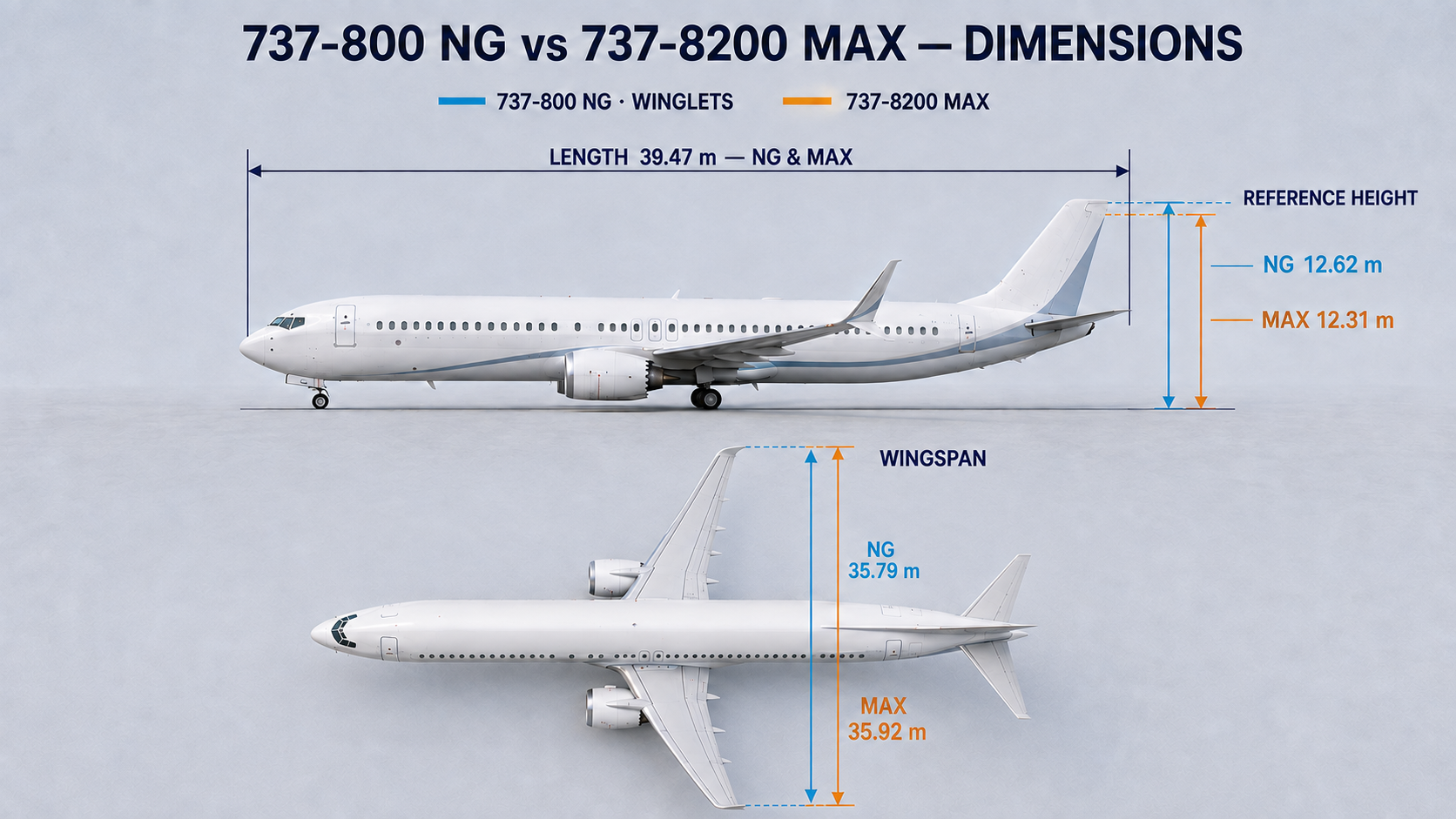
The 737-800 and 737-8200 share the same fuselage length, while their wing geometry and reference height differ.
Length
35.79 mWingspan
12.62 mReference height
Length
35.92 mWingspan
12.31 mReference height
- NG minimum 180° pavement width: approximately 24.3 m.
- MAX minimum 180° pavement width: approximately 24.4 m.
Exterior lights make the aircraft visible, illuminate its path and help the crew inspect critical external areas.
Exterior lights
- Landing: forward illumination for takeoff, approach and landing.
- Taxi and runway turnoff: illuminate the taxi path and areas ahead of the main gear.
- Position: red left, green right and white aft navigation references.
- Strobe: high-intensity white anti-collision awareness.
- Anti-collision: red lights above and below the fuselage.
- Logo, wing and wheel-well: illuminate the tail, wing leading edges and gear bays.
Go deeper · Taxi-light variants
Depending on aircraft effectivity, the taxi light is installed in the nose-wheel well or LED taxi lights are installed in the wing-root strakelets. Their illumination is commanded by the TAXI light switch.
Emergency lights
With the flight deck switch guarded in ARMED, the emergency lights illuminate automatically if DC bus No. 1 fails or AC power is switched off. Selecting ON illuminates all emergency lights; OFF prevents automatic operation.
- Interior: aisle, ceiling and exit identification.
- Exterior: illuminate deployed escape slides.
- Aft attendant switch: overrides the flight deck control and turns the emergency lights on.

Illuminates amber whenever the EMER EXIT LIGHTS switch is not in the guarded ARMED position. It warns that automatic emergency-light operation is not armed.
Go deeper · Two cabin path systems
Aircraft may use electrically powered floor-proximity lighting or photoluminescent aisle markings. Photoluminescent strips must receive the specified cabin-light charging time; crews must identify the system installed on their aircraft.
Passenger signs combine manual crew control with automatic logic linked to aircraft configuration.
Fasten seat belts
- OFF: the FASTEN SEAT BELTS and RETURN TO SEAT signs are not illuminated.
- AUTO: the signs illuminate or extinguish automatically according to aircraft configuration. They illuminate when the landing gear or flaps are extended and extinguish when both are retracted.
- ON: the signs are illuminated continuously.
No smoking
The NO SMOKING signs are permanently illuminated. The switch is used by the pilots as a reminder that the cabin has been secured.
Flight crew and passengers use two independent oxygen systems designed for different operating needs.
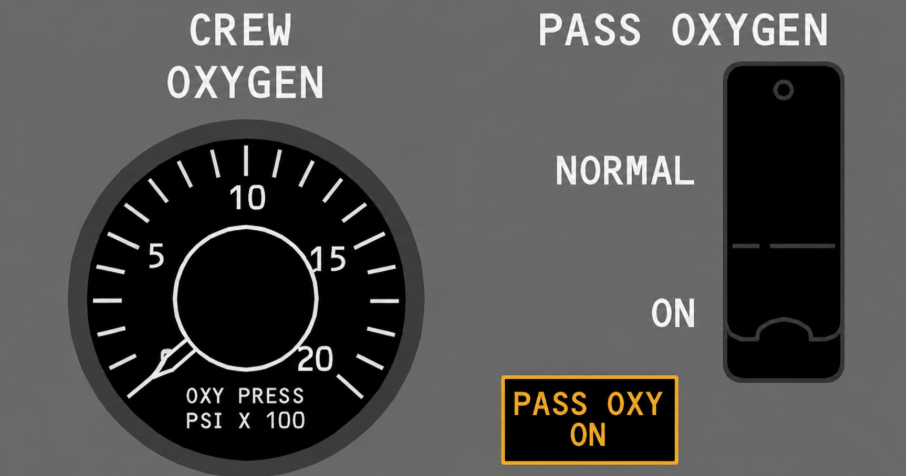
Flight crew oxygen
A single high-pressure cylinder supplies quick-donning masks at each crew station through a pressure-reducing regulator. Cylinder pressure is shown on the aft overhead panel and may be as high as 1,850 psi.
- NORMAL: supplies a mixture of cabin air and oxygen according to demand.
- 100%: supplies pure oxygen on demand.
- EMERGENCY: supplies 100% oxygen under positive pressure.
Go deeper · Mask and microphone
Removing the quick-donning mask and opening its stowage box initiates oxygen flow. Microphone selection or activation depends on aircraft effectivity: TEST/RESET is required on many configurations, while on MAX aircraft 1F041–1F045 the microphone activates when the left stowage-box door opens. The flow indicator confirms oxygen flow.
Passenger oxygen
Independent chemical oxygen sources are installed at passenger service units, attendant stations and lavatories. The masks drop automatically at approximately 14,000 ft cabin altitude, or manually when PASS OXYGEN is selected ON.
Pulling one mask activates the source and releases all masks in that unit. One chemical generator can supply up to four masks. Oxygen then flows continuously for approximately 12 minutes and cannot be shut off.
Portable oxygen
Portable first-aid and supplemental oxygen cylinders are installed at suitable locations in the passenger cabin for passengers or crew members who develop a physiological need for oxygen. Depending on the installed equipment, the FCOM describes cylinders containing 120 litres (4.25 ft³) or 311 litres (11 ft³) of free oxygen when charged to approximately 1,800 psi at 21°C. Verify the installed capacity on the cylinder placard.
- 2 L/min outlet: a full 120-litre cylinder provides approximately 60 minutes.
- 4 L/min outlet: a full 120-litre cylinder provides approximately 30 minutes.
- Equipment: pressure gauge, pressure regulator and ON/OFF valve.
Entry, service, cargo, flight deck and emergency-exit doors use different locking and indication systems.
Description
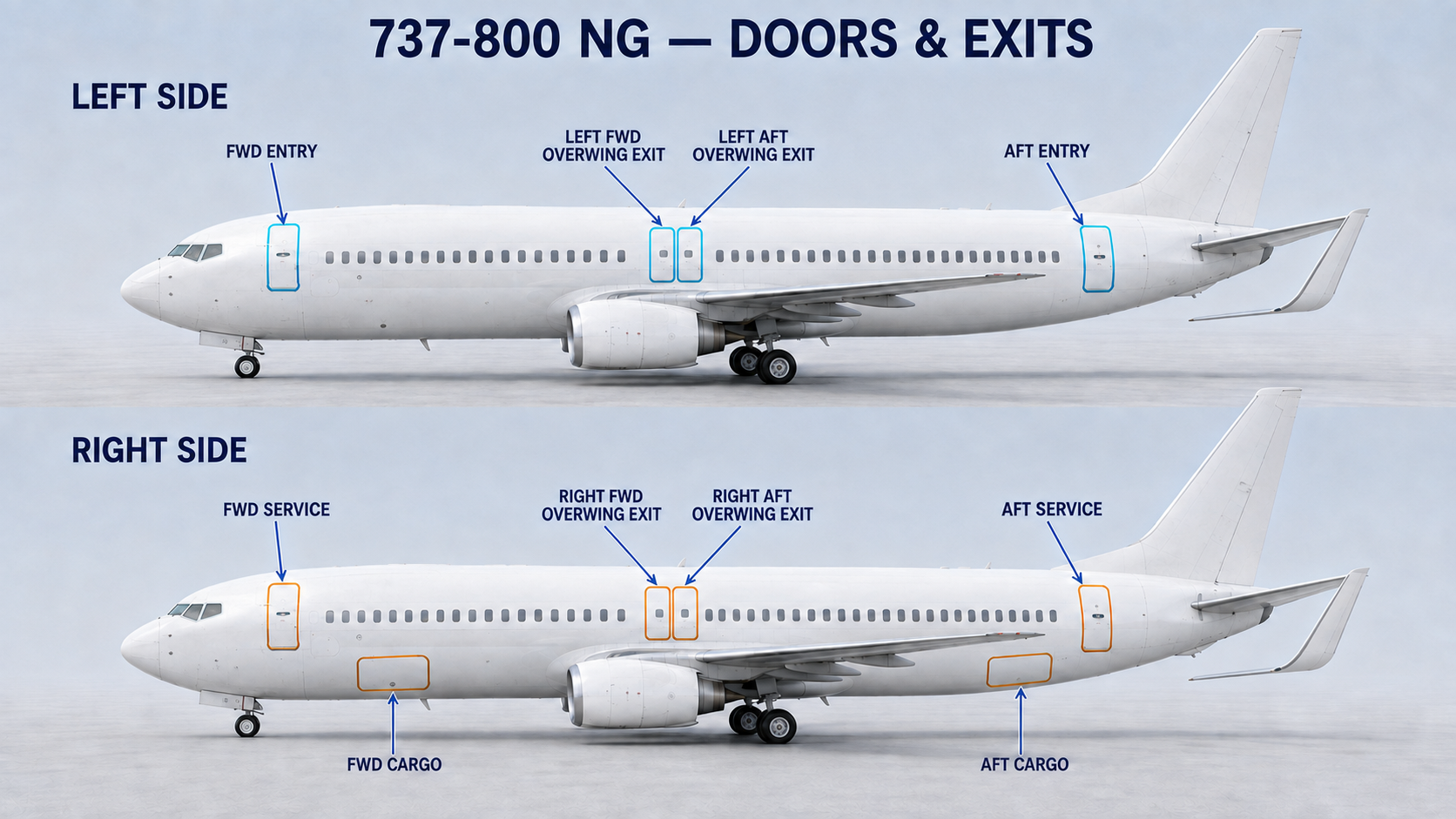
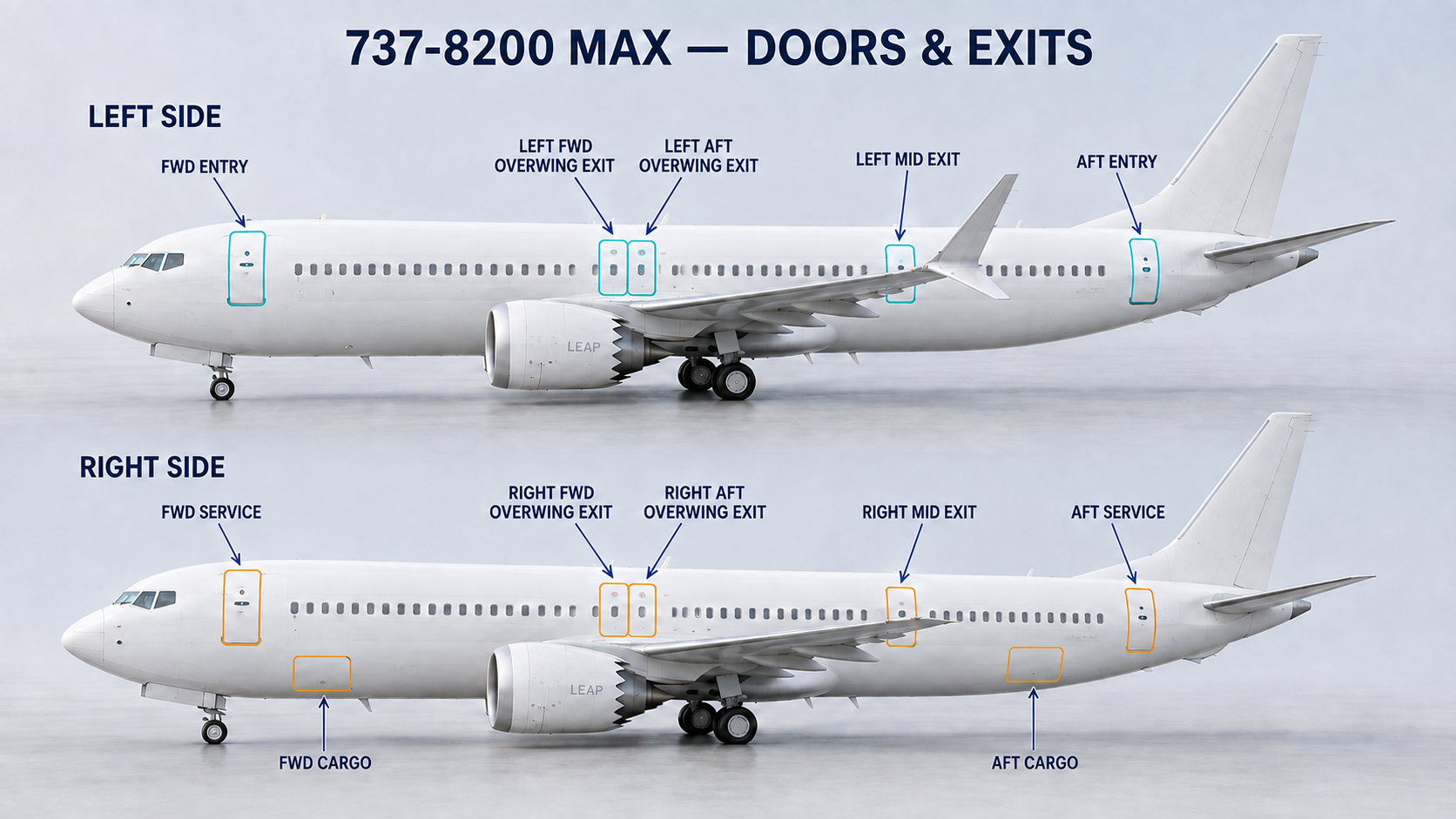
- Entry and service: four primary cabin doors with escape-slide provisions.
- Cargo: two inward-opening plug-type pressure doors on the lower right fuselage.
- Flight deck: electrically locked reinforced door with emergency access and decompression panels.
- Flight deck windows No. 2: can open and provide emergency egress; only the first officer’s can be opened externally.
- Overwing exits: mechanically retained and automatically flight-locked by 28 V DC logic.
Go deeper · Overwing flight locks
The overwing exits lock automatically when all of the following conditions are satisfied:
- three of the four entry and service doors are closed;
- either engine is running;
- the aircraft is airborne, or both thrust levers are advanced.
The exits unlock if any one of these conditions is lost or if DC power fails.
Indications
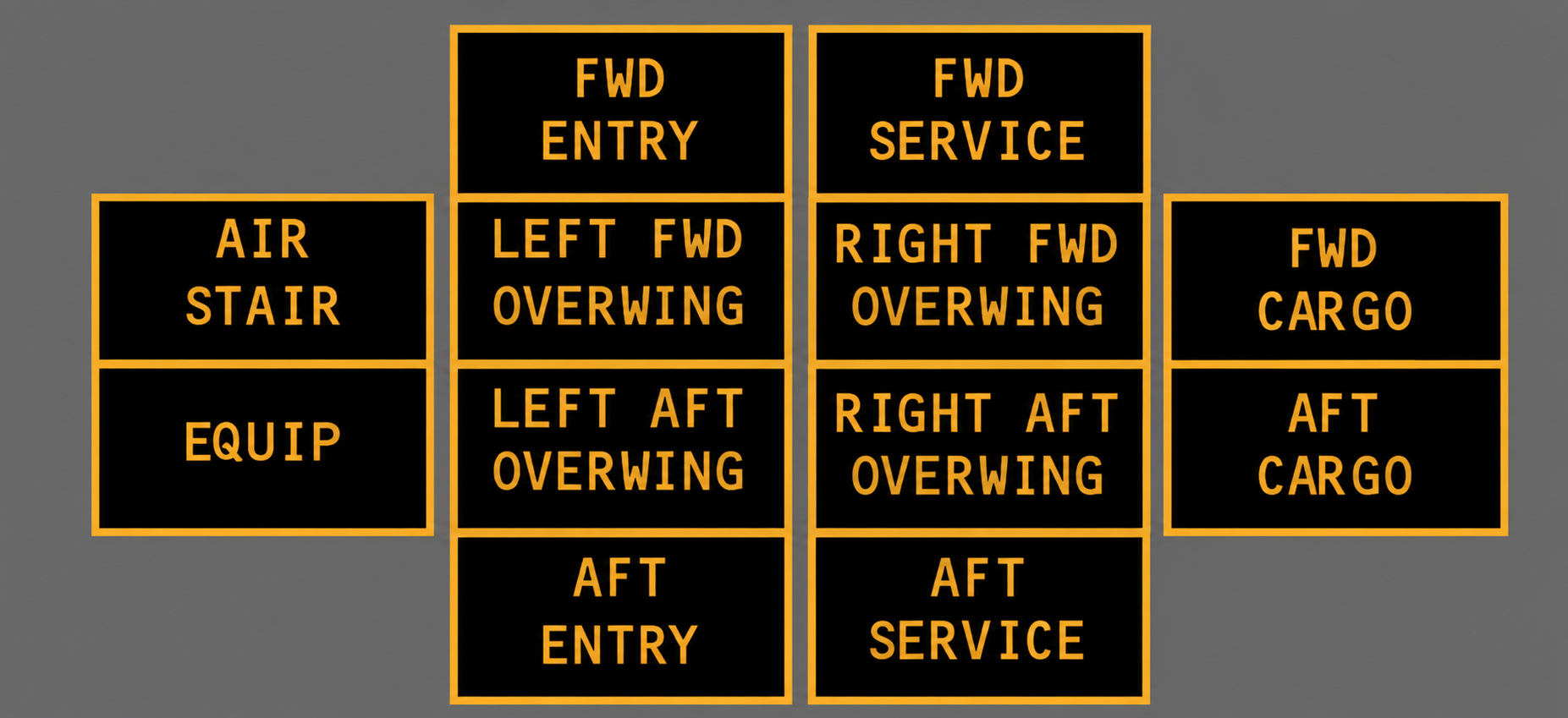
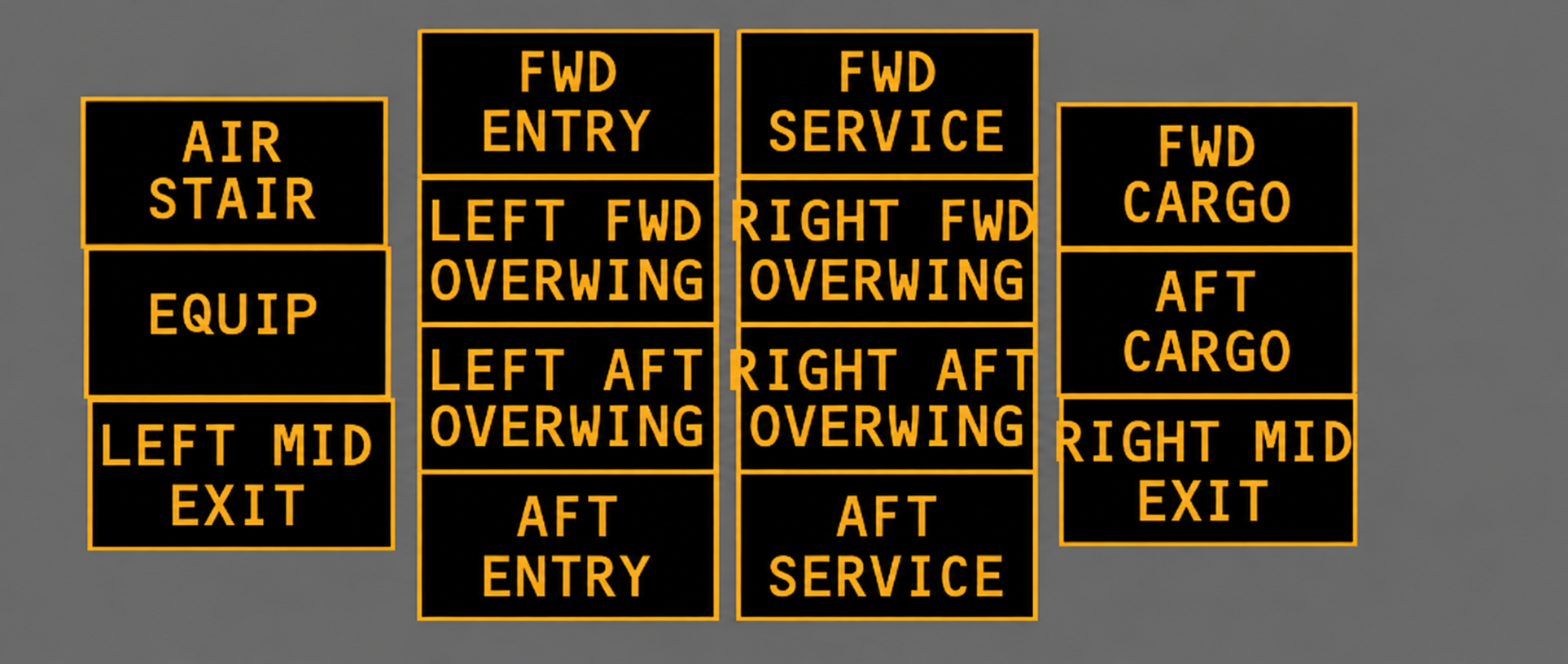
An amber light identifies the door or exit that is not closed and locked. The 737-8200 panel adds separate LEFT MID EXIT and RIGHT MID EXIT indications for its additional exits.
A single pressurized potable-water tank supplies the galleys and lavatory sinks.
- Tank: behind the aft cargo compartment.
- Pressure: engine bleed air or the water-system air compressor.
- Quantity: displayed on the attendant panel.
- Waste water: drains overboard through forward and aft heated drain masts.
Lavatories provide hot and cold water. Each heater is below its sink, reheats a new charge in approximately four minutes and includes automatic overheat protection. Galleys receive cold water.
The optional forward airstair allows boarding without airport stairs and stows below the forward entry door.
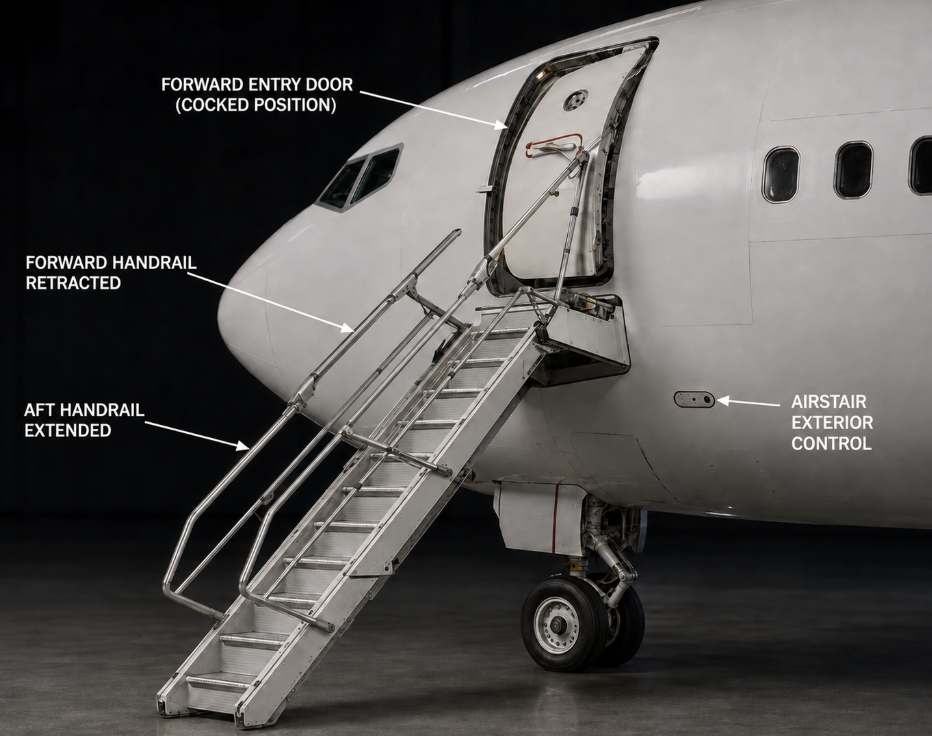
The electrically operated stair can be controlled from inside or outside. Its pressure door opens automatically before extension, and upper handrails are attached after the stair is fully extended.
Operation from inside
The interior controls are on the forward attendant panel. First open the forward entry door to the cocked position: the door-open safety circuit prevents both normal and standby operation while the door is closed.
- Normal operation — 115 V AC: hold EXTEND or RETRACT until travel is complete.
- Standby operation — DC: if normal operation is unavailable, ensure the flight deck BATTERY switch is ON, then hold STANDBY together with the required EXTEND or RETRACT switch.
The STAIR OPER light remains illuminated while the stair is moving. With tread lights selected AUTO, they illuminate when the stair is fully extended and extinguish as it retracts.
Operation from outside
The exterior controls are in a recess below and to the right of the airstair compartment. They bypass the door-open interlock, so the forward entry door does not need to be open.
- Normal operation: move and hold the airstair control at EXTEND or RETRACT until travel is complete.
- Standby operation — DC: hold the spring-loaded NORMAL/STANDBY switch at STANDBY while commanding EXTEND or RETRACT. Power comes directly from the battery bus, so the flight deck BATTERY switch does not need to be ON.
- Before retraction: stow both upper handrail extensions. The handrail interlocks normally prevent retraction while they remain extended.
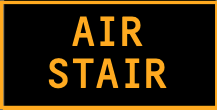
Illuminates amber when the airstair pressure door is unlocked. It also activates the DOORS system annunciator and the MASTER CAUTION lights.
The cabin access panel combines a keypad, an emergency-entry sequence and three lights that show the state of the flight deck door.
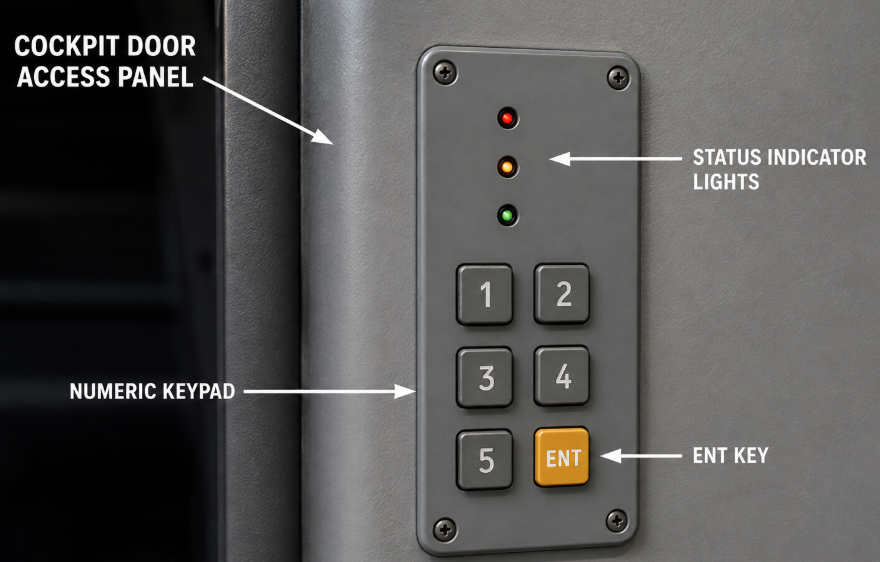
Emergency access
In case of pilot incapacitation, an authorised crew member enters the pre-programmed 3-to-8-digit emergency access code, then presses ENT. A flight deck chime sounds and the amber AUTO UNLK light illuminates at the pilots' panel.
- UNLKD selected: the pilots unlock the door immediately while the selector is held.
- DENY selected: the request is rejected and further emergency-code entries are inhibited for several minutes.
- No pilot action: after the programmed time delay, the door unlocks automatically. Before it unlocks, the chime sounds continuously and AUTO UNLK flashes.
Access lights
- Red: the flight deck door is locked, or the Flight Deck Access System switch is OFF.
- Amber: the correct emergency access code has been entered and the timed access sequence is active.
- Green: the flight deck door is unlocked.